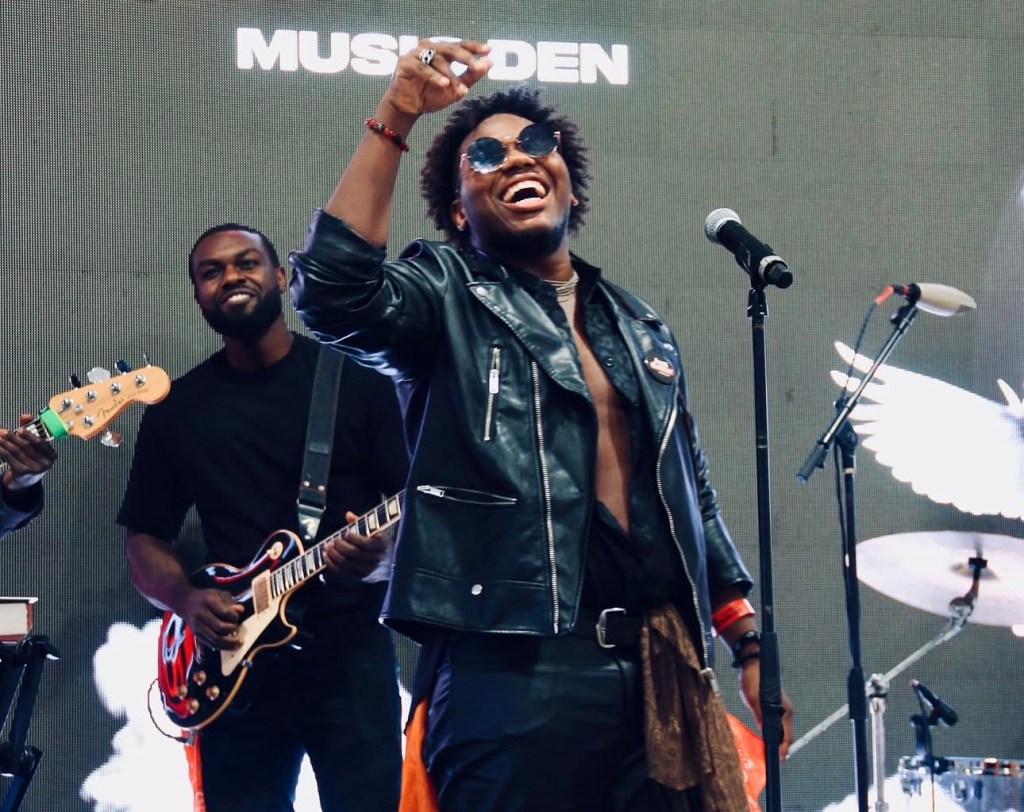
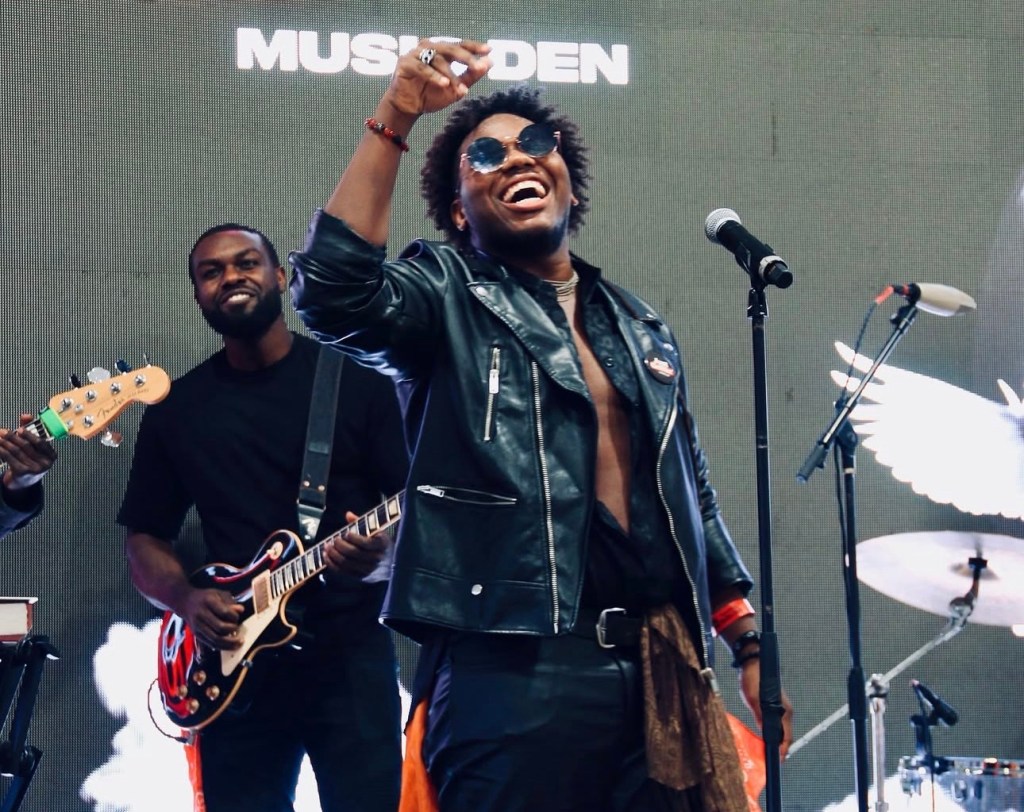
From the Berklee grind to the bright lights of American Idol, and now deep in his own sonic lane, Edi Callier is more than a vocalist, he’s a storyteller in slow motion. With the release of his soulful single “Muse,” he invites us into a vulnerable headspace that feels both deeply personal and universally human.
In this exclusive Q&A, we sit down with Edi to explore the real stories behind the stage lights: what drives him as an artist, how “Muse” came to life, and why authenticity is his most powerful instrument.
Whether you’re a fan who’s followed every chord or an independent artist chasing your own truth, this conversation cuts past the surface. It’s not just about music, but it’s about intention, identity, and why creative honesty still matters.
Welcome to the mind of Edi Callier, raw, reflective, and entirely his own.
BTM:
“Your Instagram bio notes you’re vegan, you were on American Idol Season 22, and now you’ve just released ‘Muse.’ How have these facets shaped your identity as an artist, and how do they surface in your music?”
Edi:
Honestly, I’d never really thought about how being vegan has shaped my artistic identity before now, but I think it may, in some way, affect my approach to music—and my approach to life in general and the sanctity of it—because I feel like it may slip out a bit in, you know, almost a savior complex in some ways (laughs). A lot of my music is either about me trying to save someone, save a situation, or save myself.
Being on American Idol definitely changed a lot about who I am as an artist. In fact, it made me more of who I’ve always been working toward becoming, because being around that much talent—focused, driven talent—especially in an environment full of people who are also working toward healing—has been really important to where I’ve gone since. It reignited a fire in me, a passion, a drive, a desire.
Getting the Golden Ticket and everything that happened with the panel of judges—that was a big moment of validation. It reminded me that the things I’ve been wanting to do with my life and career are actually possible, and that people believe in me enough to do it. You can believe in yourself all day—and you need that belief to even start a journey like this—but having that extra push, that extra green light, does a lot.
The song “Muse,” funny enough, is my latest single as of the time of this interview, but it’s probably one of the oldest songs in my catalog. It’s gone through several versions and iterations. I’ve recorded and re-recorded it several times. Honestly, that’s almost a testament to where I am in my career and life: this song has been reshaped so many times, but at its core, it’s still the same. I’ve done it live a million times all around the country and beyond, but the version that’s out now feels most like what the record was originally supposed to be. Seeing how it resonates with people feels like a reflection of where I am now—the refinement and becoming, ultimately, who I’m meant to be.
BTM:
“On ‘Muse,’ the tempo and soundscape feel hushed and contemplative. Can you walk us through your writing and production process and what emotional or sonic inspirations guided that minimalist, late-night vibe?”
Edi:
So, I don’t listen to the radio very often. I’ve just found myself not particularly interested in a lot of what’s playing—not because it isn’t good or because the people making it aren’t working hard—but a lot of the music that’s popular right now doesn’t really resonate with me personally, at least not in the moments that it’s playing.
Since putting out my first project—my first full body of work—I’ve set out on a journey to consistently create things that I would want to hear. If I was out somewhere and a song came on the intercom, or if I was in the car and it played on the radio—that’s the kind of music I want to make. And that’s what this song is.
In the writing and production, I wanted to make something that I’d actually want to hear on the radio, because the thing about it is, I believe that any idea, any preference, anything that people like or dislike or want to do—that desire is shared by, in this world of billions of people, at least ten thousand people. And if it’s something that really resonates broadly, it’s a lot more than that.
So if there’s something that I like, I know there are at least ten thousand people in the world that also like it. And because a lot of times, the things I like are also what a lot of other people like, if something really resonates with me—really reaches my soul, really makes me feel a certain way—I have a strong belief that a lot more people will resonate with it too.
All of my music comes from a real place—real stories being told. It’s things that move me that I put into the music to move others. That’s what went into the writing of “Muse.”
It’s a song about love—not just being in love, but being in love and not even realizing that’s what was coming. I’ve got a few songs like that in my catalog, interestingly enough. But this one—it’s about being in love with the person that inspires you, and falling in love not even necessarily for love itself, but because the inspiration showed you a side of someone that makes you feel something. Something real.
BTM:
“You mention in interviews that mental health advocacy is important to you. Does ‘Muse’ connect to that mission in any way, perhaps as a self-care anthem or artistic meditation?”
Edi:
Yes, “Muse” does connect to that mission in a sense.
It’s a testament to how love can change one’s mind state. The thing about it is, all of my music can be attributed to the love for another, the love for self, love of a dream, or anything like that. Being able to be in that space where something or someone inspires you so much that it makes you write a song, it makes you write a poem, it makes you get up from your chair or from your bed or from your couch and do something—that’s really what this song is.
And in connection to mental health, it’s that type of thing where, you know, we can be caught in our own space, in our own way, and we need that extra push to get us to the places that we need to be.
So yeah, that’s what this song represents in that space.
BTM:
“Your journey took you from Boston’s Berklee to Atlanta to L.A. What did you carry with you in terms of influences or lessons along the way, and how are those reflected in the genre-blending energy of tracks like ‘Muse’?”
Edi:
Ooh, wow—this is a deep question.
I think each space has shaped me in a different way. Berklee, Atlanta, Los Angeles—they all played their part.
The genre-bending, genre-blending aspects of songs like “Muse” and the rest of my catalog just come from what I grew up on and what’s inspired me throughout my journey. A place like Berklee is a melting pot for ideas and for energies—musically inspired ideas and inspired energy. It’s just a bunch of people gathered in one place who are determined to do music for the rest of their lives at a high level.
When I went to Berklee, that was the first time I’d really been in an environment like that—really immersed in it—and that did a lot for me as a musician and as an artist. Even though my time there was short, it was very fruitful because it shaped a lot of who I’ve become since.
Atlanta did so much to grow me, to mold me—the soul, the storytelling, the connection with the crowd, the musicality—a lot of that was built in Atlanta for me.
And then Los Angeles—moving to Los Angeles really refined it, polished it. L.A. is a place where the way a thing is packaged means a lot. The way it looks and feels, the intentionality behind it—sometimes that’s even more important than the musical acuity (if that’s the right word).
In simpler terms, it’s less about what notes you play and more about how you play them—and what people feel when you do.
It’s also such a genre-melting pot. L.A. really encouraged me to express my freedom musically. One of the things I noticed in Atlanta was that I sometimes felt like I had to find ways to fit in to stand out, but in L.A., it’s more the idea that you have to stand out to fit in.
That’s something that really resonates with me because I’ve never been someone who fits neatly into a box or someone else’s idea of who I should be. I’ve always kind of been on my own track. And yeah—that’s what that does for me.
BTM:
“You’ve said that ‘the stage is your home.’ How do you translate that stage presence into studio recordings, especially on a single as intimate as ‘Muse,’ so listeners feel that same emotional connection?”
Edi:
It’s interesting—the way this question is worded makes me think on such a deeper level.
Because yeah, the stage… I feel more at home on stage than I do anywhere else, honestly. I feel more at home on stage than I do at home sometimes.
So when you ask how I translate that stage presence into studio recordings, it’s really like asking: how do I create that home on tape as well? That’s wild to think about.
Especially with a song like “Muse”—because when I listen to it, it still feels like home to me. Even though it’s not on a stage, it feels more like a home that I’ve built for others to live in, you know? Maybe that’s what it is.
When I’m turning these songs that I do on stage into records—especially a song like this one, where I’d been performing it live long before the final version existed—it’s almost like I’m packaging that feeling, that space, in pieces. Usually, I’d make the song in the studio first and then bring it to the stage. But “Muse” was the other way around.
So it’s like I have this home, this place where I feel completely myself, and I’m building little versions of that for other people to experience. Almost like building remote houses—on-demand homes you can live in whenever you want to be in that space, wherever you are. Like bringing that feeling of home to you.
BTM:
“What mood or moment is this project made for? (Late nights? Long drives? Healing? Etc.)”
Edi:
It’s definitely made for long drives, late nights, and healing—the things I always hope my music can be a part of. But this song in particular, I wanted it to also hold space for excitement, for joy, for peace.
The way I’ve performed “Muse” for years has carried a certain energy and emotion, and the feeling of that journey is still intact. But the version that ended up on the record—the version that’s out now—takes that same heart and translates it differently. It’s kind of like what I was saying about L.A. versus other places: it’s become less about the notes—even though there are still a lot of notes—and more about the way the notes feel.
My intention was to make something that feels exciting, invigorating—like you’re being pulled into this world that I’ve created. And once you’re there, you feel everything happening in that space. By the end, you move from that space to a whole different one where you can finally breathe. The song itself is a journey.
It starts with that guitar line and the vocal run at the beginning, and then you’re yanked into the story—into this world—with highs and lows, moments of repetition but also growth and expansion. Each section just builds from where it started.
Then the second chorus comes in, and I remember being in the studio thinking, “Okay, now we’ve done this chorus—let’s do it again in a stadium. In a coliseum.” Even little details, like the reverb I used on the snare, were very intentional.
And Jake Biller—shoutout to Jake—that guitar solo at the end takes it somewhere else entirely. If you listen closely, you’ll hear me singing with the solo, like we’re going back and forth, showing how the music and the vocal and the story flow together and lift each other higher.
It’s also a mirror to love itself—the way it grows, expands, and then draws closer. When everything comes together on that line, “let that music play on,” the guitar, the bass, the strings, and the vocal all collide in this beautiful way. And then, at the end, it breaks down into a new kind of intimacy—not the size of a crowd anymore, but that direct space between me and the listener.
So the whole thing is meant to be a journey—something that can be experienced. You can definitely listen to it while you’re doing your thing—driving, working, moving through your day—but if you have the space and time, it’s also one of those songs where you can put your headphones in, close your eyes, and let it take you on that journey, wherever you go with it.
BTM:
“Any hidden Easter eggs or messages fans should listen for?”
Edi:
There are definitely layers in this song. “Muse” was always meant to be one of those pieces you can revisit and keep uncovering new meaning in each time.
On the surface, it’s a love song—the kind of “I love you, you love me” moment anyone can relate to. But underneath that, it’s also about a different kind of relationship: the one between the artist and the source of inspiration. It could be creativity itself. It could be faith. It could even be God. It’s about falling in love with whatever it is that makes you come alive.
Every time I sing “I fell in love with my muse,” it shifts depending on where you’re standing as a listener. Maybe it’s a person, maybe it’s an idea, maybe it’s your purpose. That openness is intentional.
And when I say “let that music play on,” it becomes a quiet invitation—to keep creating, to keep feeling. More than a lyric, it’s an invitation to let what inspires you keep going long after the song ends.
Those meanings are all there, woven in, revealing themselves the more you listen.
BTM:
“Who’s the first person you played the project for, and what was their reaction?”
Edi:
It wasn’t technically the first time I’d ever played the song, but the moment that really stands out was during Hollywood Week on American Idol.
I remember my first audition for the judges. I performed my original song “Free,” and the response was incredible. I got a standing ovation, Lionel Richie told me he could see me selling out stadiums, Katy Perry asked where she could hear more of my music, and Luke Bryan wondered why I wasn’t already signed to a label. Before I walked out of that room with my Golden Ticket, the one note they gave me was that they wanted to hear more—to really hear me stretch out a bit.
So, going into the next round, I had a plan. From the beginning, my intention for *Idol* was to do original music, and I knew just the song.
Fast-forward to Hollywood Week. They’d built this massive arena inside an airport hangar, and we’d spent a week preparing for our next performance. The day finally came, and I remember walking up there with my electric guitar to stand in front of Lionel, Katy, and Luke again, now surrounded by a room full of these insanely talented artists—my peers—and just letting the first notes of “Muse” fill the space.
I remember that being the moment I’d prepared to be the first time the world would hear “Muse” on a grand scale, and though the audio from that performance never aired, that moment still stuck with me—the judges’ reactions, my peers’ energy, the feeling in the room. It solidified my place there, and it gave me that extra push to say, “Yeah, this is a song that’s worth sharing.”
BTM:
“What’s one experience, personal or professional, that changed the way you create music?”
Edi:
There are so many. I’ve had such a crazy journey, and each moment has shaped some part of how I create—how I create, why I create, and who I create for.
I know my mom passing away had a lot to do with what changed in the way that I make music and the reason why I do. Honestly, though, it wasn’t just her passing—it was what happened after I made the choice to keep going. Choosing to keep her with me while still moving forward, sharing my story on stage, and seeing the way people connected to it—seeing how it helped people heal, how it made them reflect and come together. That showed me what music could do on a level beyond the notes and melodies and harmonies—how deep it can actually reach. Understanding the responsibility that comes with that really shifted my mindset when it comes to creating and performing.
I’ve always tried to make music that means something, but those moments after that really showed me: what you put into it is what comes out and what people can attach themselves to. Something they can even build a piece of their identity around.
I’ve had people tell me my songs have saved the lives of their loved ones, or even their own. That they’ve used them to mark the beginning of new love, or to honor the memory of someone they’d lost. It made me realize that even though everything starts with me in a room writing, producing, getting the feeling right, once it’s out there, it’s not just mine anymore.
It’s like raising a child. You nurture it, pour yourself into it, and then at some point, it grows up and goes out into the world to do its own thing. And sometimes that song—or that “child”—inspires something else. It gives birth to new songs, new artists, even whole movements.
That’s how I see it now. These songs, this art, the things that come from my soul—they start with me, but they’re meant to go out and keep growing long after I let them go.
BTM:
“Which artists have had the biggest influence on your sound, and why?”
Edi:
That’s a list right there. A heck of a list.
Of course, there’s Prince, Michael Jackson, Stevie Wonder, Earth, Wind & Fire, James Brown—the pillars. You’ve got Nirvana, Aerosmith, and a lot of gospel: Kim Burrell, Tye Tribbett, Israel Houghton, Deitrick Haddon, The Clark Sisters.
You know who I never really gave enough credit to until recently? Chris Brown. The other day, I was listening back through his catalog and realized how much he shaped me vocally. Around the F.A.M.E. and Fortune albums—that era was a really pivotal time in my development as an artist and vocalist. That, mixed with all the gospel and jazz I was surrounded by, definitely built a big part of my foundation.
And then there’s Musiq Soulchild—oh my gosh—and Jill Scott, of course. Frank Ocean showed up at another pivotal moment for me, especially his writing style. The way he weaves poetic stories and melody together—that really stuck.
Growing up in a house with my mom and dad, two of the most artistic people you’ll ever meet, shaped me in a huge way. Also, I’d be remiss not to mention John Williams, Danny Elfman, Bernard Herrmann, Robert Glasper, Chet Baker, Art Tatum, Billie Holiday—a whole slew of jazz influences. And jazz from around the world too: Latin jazz, Afro-centric jazz, Indian music, South American rhythms—especially Brazilian music. Dance music, EDM, house—all of that shaped pieces of who I am.
It’s funny—my roots on my dad’s side come from New Orleans, with that whole Creole thing, and one of the most famous Creole dishes is gumbo. So I guess that’s what I am: just a little gumbo of world influences that made me who I am today. Also the reason why I’m spicy and delicious (laughs).
BTM:
“What’s next for you? Any upcoming projects, collaborations, or dreams you’re chasing?”
Edi:
What’s next is the stage.
Not only the stage itself, but this next stage of stages—this new chapter in my journey of being on stage. I’ve traveled all across the country and beyond, doing what I love. I’ve released a lot of music that I really enjoy, and I’m about to release a whole lot more. But now, I’m in a place where there has to be elevation. Growth. Something beyond where I’ve already been.
So I’m working toward that—bigger stages, bigger shows, bigger events, more intention. I want to bring the experience that I have in my mind, in my heart, and in my soul to life, and share it with people who already resonate with the message, and with those who haven’t experienced it yet but will feel it when they do. That takes a certain kind of production, a certain kind of detail and care.
There’s also a lot that we’ve already done that I want to showcase to the world. We’ve recorded full shows—full camera crews, high-quality video, direct-feed multitrack audio, behind-the-scenes moments—and I’m turning those into pieces people can watch and feel. I want them to get even a small glimpse of what it feels like to be in that room, and I want the people who can bring us to bigger spaces to see what we’re building and where we’re headed.
I’ve got a ton of records ready to go, but I don’t want to give too much away yet. I want to make sure that when the announcements happen, they’re done with intention and purpose—executed in the best possible way.
And the dreams… the dreams are always there. Always growing, always evolving. One day, I’ll look back at this interview after playing sold-out shows at Madison Square Garden and Wembley Stadium, and I’ll be able to say, “That’s what I said I wanted to do.”
And that’s what I’m working toward right now.
BTM:
Bonus Question: “If years from now a new artist cites you as their biggest influence, what would you hope they learned from your journey?”
Edi:
Authenticity.
Being authentically who you are, no matter what, in everything you do. Realizing that the only person you’ll ever need to be is the person you are—or the person you’re becoming. Don’t ever let anyone dim your light or tell you that you’re not good enough, or that you don’t fit into their idea of who they *think* you should be. Always remember, those same people are going to be the ones in line later, saying they saw it first.
When the people who are meant for you—who are meant to hear you, feel you, and see you—show up, they’ll show up because you were exactly who you are. There are people out there who need exactly what you have, and exactly who you are, as you are. Be that.
I hope that years from now, someone looks back and says that seeing this was part of what helped them become who they are as an artist. That everything they created, the lives they touched, came from that reminder to stay true to themselves.
I want to be an image of possibility. I want people to see that being who you are authentically—and that being someone like me, like the “me’s” around the world—is enough. It’s possible to reach the world as that.
Because a lot of times, the only thing that keeps people from stepping into what’s next isn’t the dream itself—it’s the doubt that it could happen for them.
And I want to be one of the voices that says, “Yes, it is.”
Check for Edi on IG: @edicallier
Also fans leave your thoughts of the interview in the Comment section, as well as Like and Subscribe !
Follow us for more independent reviews, exclusive artist interviews, and raw music commentary that puts art over hype.Leave a LIKE, a COMMENT, and a SHARE for the artist!
 Beyond The Mainstreams
Leave a comment